
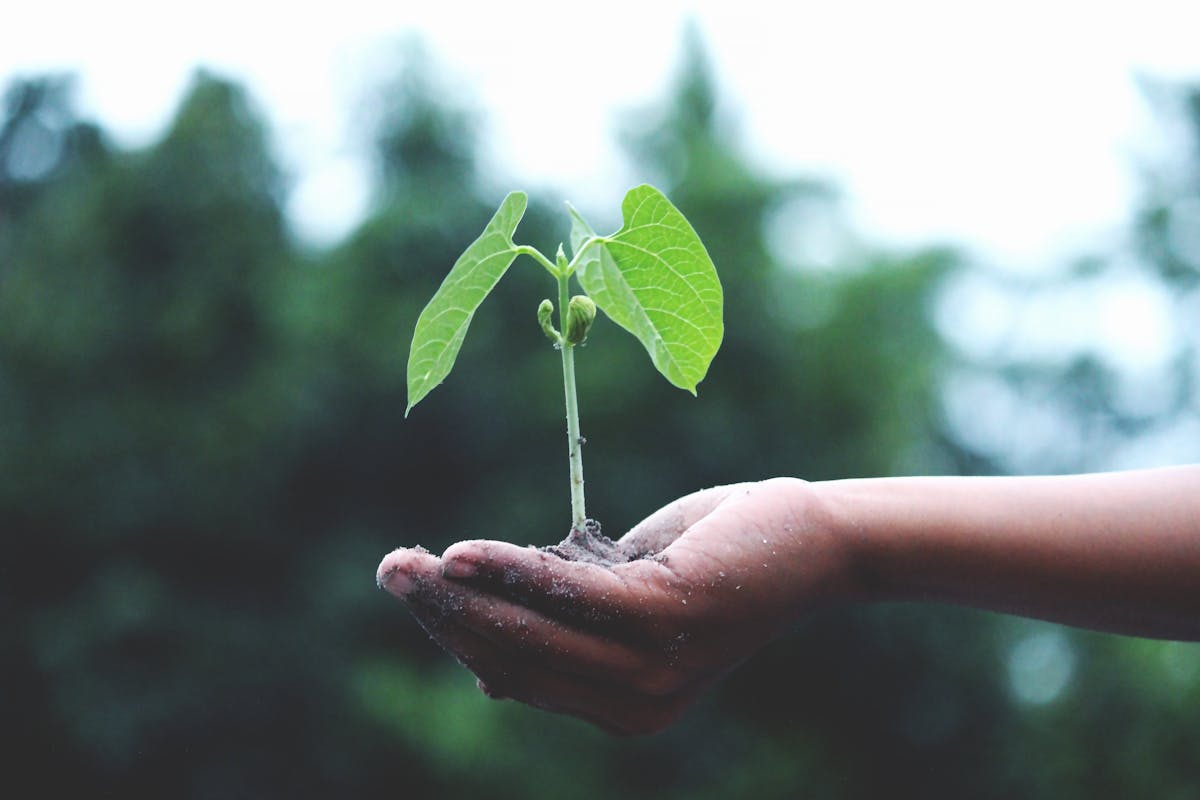
"Everything is connected. Concern for the environment thus needs to be joined to a sincere love for our fellow human beings."
ECOLOGY
MINISTRY
"Caring for our Common Home"
"Rooted in Faith, Committed to the Earth in the spirit of Laudato Si'"
The Marist Ecology Ministry promotes environmental awareness and sustainable practices within our schools and communities. We aim to foster an "integral ecology" that recognizes the interconnectedness of all life, following the invitation of Pope Francis in Laudato Si'.
Marist Action for Creation
Environmental Advocacy
We are not passive witnesses to the destruction of Creation. As Marists, we are called to act — to educate, mobilize, and advocate in defense of the living world that God entrusted to our care. Our voice rises from the forest floor to the halls of decision-making.
Eco-Education in Schools
We integrate ecological literacy into Marist school curricula across East Asia — nurturing a generation of young people who think, feel, and act as stewards of the Earth rather than consumers of it.
- Laudato Si' curriculum modules
- Student eco-clubs in every school
- Annual ecology awareness week
Reforestation & Tree-Planting
Through community-based tree-planting drives, mangrove restoration, and watershed care programs, the Marist network mobilizes hundreds of students, Brothers, and volunteers in tangible acts of healing the land.
- 10,000+ trees planted since 2018
- Mangrove belt restoration drives
- Riverbank and watershed care
Policy Advocacy & Partnership
We collaborate with government agencies, NGOs, and interfaith networks to advocate for stronger environmental legislation, community-based conservation, and meaningful climate commitments aligned with the Paris Agreement.
- Interfaith ecological coalitions
- Youth climate advocacy training
- Local government partnerships
Zero-Waste Campus Initiatives
From segregated composting to banning single-use plastics, Marist campuses are becoming living laboratories of ecological responsibility — modeling sustainable systems that ripple outward into communities.
- No single-use plastic policies
- Composting and upcycling programs
- School energy efficiency audits
Honoring Indigenous Ecological Wisdom
Indigenous communities have long held the knowledge of ecological balance. We work to amplify and preserve their wisdom — recognizing their role as the original guardians of forests, rivers, and biodiversity in our region.
- IP community immersion partnerships
- Documentation of traditional farming
- Cultural-ecological exchange programs
Rooted in Laudato Si'
Our advocacy is not merely political — it is profoundly spiritual. Pope Francis's encyclical Laudato Si' calls every person of faith to an ecological conversion: a transformation of heart that leads to a transformation of action.
"The earth, our home, is beginning to look more and more like an immense pile of filth." — Laudato Si', —21
Join the Movement
Be a Marist Eco-Advocate.
The Earth Needs You Now.
Legal & Ethical Recognition
Rights of Nature
For too long, nature has been treated solely as a resource — a commodity to be extracted and exploited. The emerging global movement for the Rights of Nature challenges this paradigm, asserting that rivers, forests, mountains, and ecosystems possess inherent legal rights to exist, flourish, and regenerate.
From Ecuador's Pachamama to New Zealand's Whanganui River, communities across the world are rewriting the legal relationship between humanity and the living Earth. The Marists stand in solidarity with this historic shift.
40+
Countries & Jurisdictions with Rights of Nature Laws
2008
Year Ecuador became 1st country to enshrine Nature's rights in its Constitution
8M+
Species currently at risk of extinction due to habitat destruction
The Five Pillars of Ecological Rights
Right to Exist
Every ecosystem has the right to exist, be preserved, and regenerate its vital cycles.
Right to Regenerate
Nature has the right to restore its own biological processes without human interference.
Right to Be Free from Pollution
Ecosystems have the right to protection from toxic contamination, including greenhouse gases.
Right to Biodiversity
Nature has the inherent right to maintain species richness without enforced monocultures or GMO threats.
Right to Legal Standing
Rivers, forests, and mountains may be represented in courts of law through human legal guardians.
"The Marist Brothers affirm that Nature is not merely a backdrop to human history — it is a partner in God's ongoing act of creation, deserving of dignity, respect, and legal recognition."
Marist Ecology Ministry — East Asia Province
The Global Warming Crisis
This is not a future threat — it is the defining emergency of our time. The evidence is overwhelming, the consequences irreversible if we fail to act, and the moral responsibility clear: humanity must stop burning fossil fuels and restore the natural systems that regulate our climate.
+1.2—C
Average Global Temperature Rise Since Pre-Industrial Era
422 ppm
Atmospheric CO2 Concentration — Highest in 3 Million Years
21 cm
Sea Level Rise Since 1900 — Accelerating Every Decade
1M/yr
Species Facing Extinction Annually Due to Climate Disruption
The Cascading Effects
Extreme Weather Events
Super-typhoons, flash floods, extreme heat waves, and prolonged droughts are intensifying in frequency and severity across East Asia and the Pacific.
Ocean Acidification & Coral Death
50% of the world's coral reefs have already died. As oceans absorb CO2, they acidify, destroying entire marine food webs on which billions depend.
Climate Refugees & Food Insecurity
By 2050, up to 1 billion people may be displaced by rising seas, desertification, and crop failures — the poorest bearing the heaviest burden they did least to cause.
Glacial Melt & Freshwater Loss
Glaciers that supply freshwater to billions of people are shrinking at alarming rates, threatening long-term water security across Asia.
Temperature Trajectory — The Tipping Point Window
Paris Agreement target: limit warming to 1.5—C above pre-industrial levels
Climate Crisis in East Asia and the Pacific
The Philippines, Indonesia, Vietnam, Japan, and other East Asian nations are among the world's most climate-vulnerable countries — facing rising sea levels, intensifying typhoon seasons, coral reef degradation, and severe flooding that displaces millions annually.
The Marist Brothers operate schools and communities in these front-line nations. Our mission is inseparable from climate action.
The clock is not stopping.
We are the last generation that can prevent the worst outcomes of climate change. The Marist Brothers call upon every person, family, school, and institution to recognize this crisis as a moral and spiritual emergency — and to act accordingly.
Read the IPCC Climate ReportFrom Crisis to Hope
Mitigation of Global Warming
The crisis is real — but so is the solution. Humanity possesses the knowledge, the technology, and the moral framework to halt the worst of climate change. What is needed now is the courage, the solidarity, and the political will to act decisively. The Marists are committed to being part of that action.
Renewable Energy Transition
Shifting from coal, oil, and natural gas to solar, wind, geothermal, and hydropower is the single most impactful action humanity can take. Marist institutions are committing to renewable energy installations across campuses in the region.
Marist East Asia Campus Energy Initiative
Forest Protection & Restoration
Forests absorb 2.6 billion tonnes of CO2 annually. Protecting existing forests and restoring degraded ones is one of the most powerful and cost-effective climate solutions available. Every tree planted is a prayer made visible.
Marist Reforestation & Watershed Program
Sustainable Food and Agriculture
The global food system accounts for up to 37% of greenhouse gas emissions. Shifting to plant-based diets, regenerative farming, and local food systems dramatically reduces agriculture's climate footprint while restoring soil health and water cycles.
- Organic school gardens on Marist campuses
- Composting programs for canteen waste
- Farmer partnership programs in Mindanao
Marist Agroecology & Food Justice Program
Climate Literacy and Education
Effective climate action begins in the classroom. Marist schools are embedding climate science, ecological ethics, and sustainable design thinking into every level of education — forming the green innovators and advocates of tomorrow.
- Science curricula updated with IPCC findings
- Annual Ecology Day in all Marist schools
- Student-led climate action clubs
Marist Schools Climate Literacy Initiative
Circular Economy and Zero Waste
Transitioning from a "take-make-dispose" economy to a circular model — where materials are reused, repaired, and recycled — can cut global carbon emissions by nearly half. Marist institutions are pioneers of circular economy thinking in their communities.
- Plastic-free campus policies
- Repair caf—s and upcycling workshops
- Waste-to-resource composting systems
Marist Zero-Waste Institution Program
Climate Justice and Policy Change
Technology and behavior change alone are insufficient without systemic policy reform. Marists advocate for a just transition — one that phases out fossil fuels while protecting workers and vulnerable communities, enshrining climate rights in law, and holding the largest emitters accountable.
"We need a global covenant of climate justice that does not sacrifice the poor on the altar of economic growth." — Inspired by Laudato Si'
Marist Climate Justice Network
The Earth does not need saving by heroes.
It needs the faithful, daily action of millions.
The Marist Brothers of East Asia commit to being an institution that walks the talk — greening our campuses, forming ecological citizens, advocating for policy change, and above all, forming young hearts that love the Earth as God loves it: completely, generously, and without condition.